
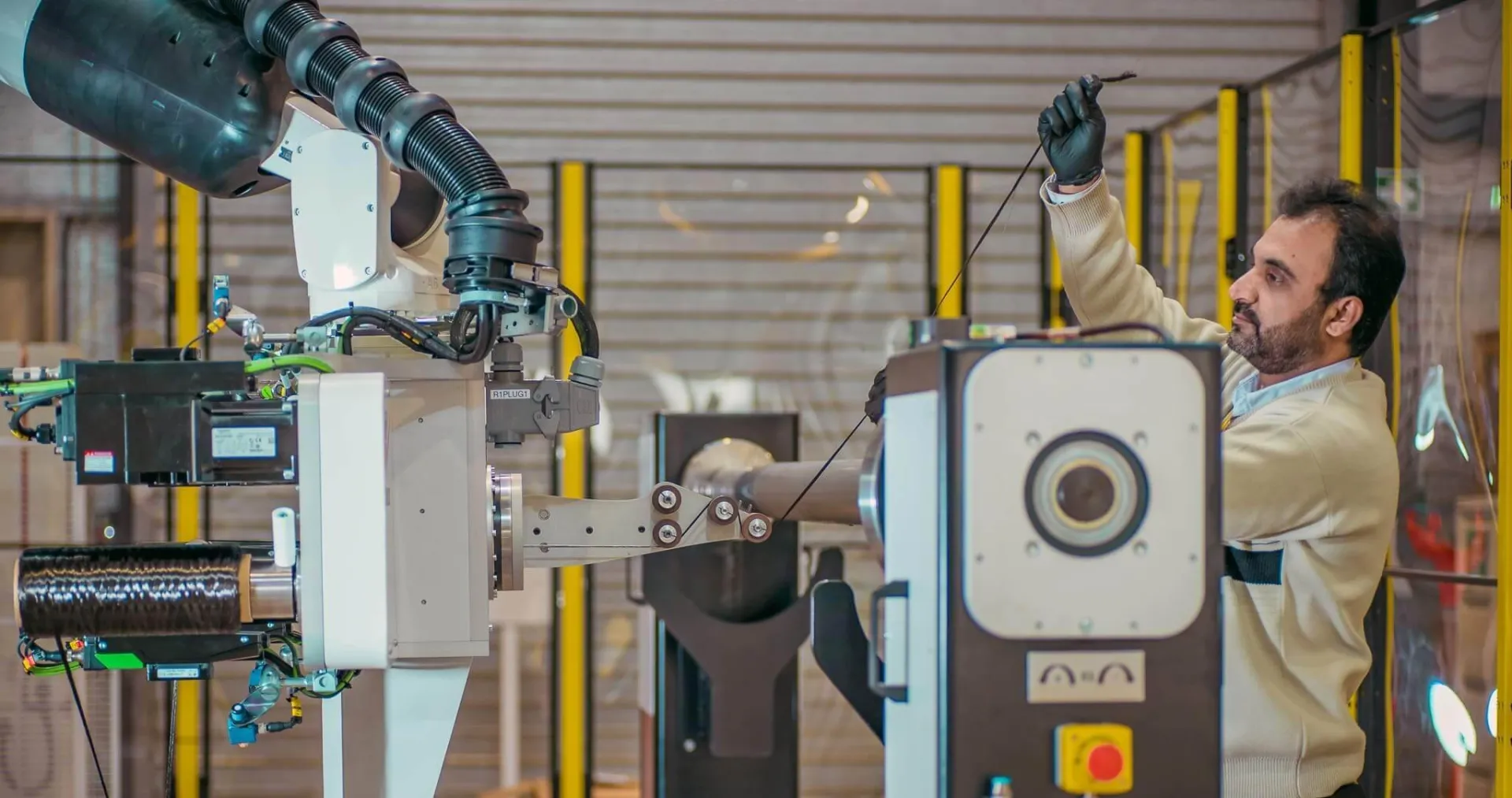
(Photo ©UniSQ)
In modern aviation, composite materials have changed the game. Lighter, stronger, and more efficient than traditional metals, they help reduce fuel consumption and improve aircraft performance. But one challenge remains critical: their repair.
Unlike metallic structures, repairing a composite component involves working with complex layers of fibers, where every intervention requires extreme precision. It is a slow, costly process highly dependent on the technician’s experience.
Facing this challenge, the Centre for Future Materials at the University of Southern Queensland (UniSQ), in collaboration with Boeing, launched a project with a clear goal: to completely transform this process.
Digitizing repair, end to end
The approach is ambitious: to connect all stages of the repair process within a single digital environment.
From damage detection using non-destructive inspection techniques, to patch design, validation, manufacturing, and deployment. Everything is integrated into the 3DEXPERIENCE platform, creating full digital continuity.
This allows teams to work from a single source of information, eliminating silos and improving accuracy in every decision.
From data to the virtual twin
One of the key advances of the project is the use of virtual twins to understand and optimize each repair.
Using real data captured during inspection, engineers can digitally reconstruct the damage, analyze its impact, and define the best repair strategy. The combination of design and simulation makes it possible to identify the optimal patch geometry, minimizing the amount of material to be replaced without compromising structural strength.
All of this before any physical intervention on the part.
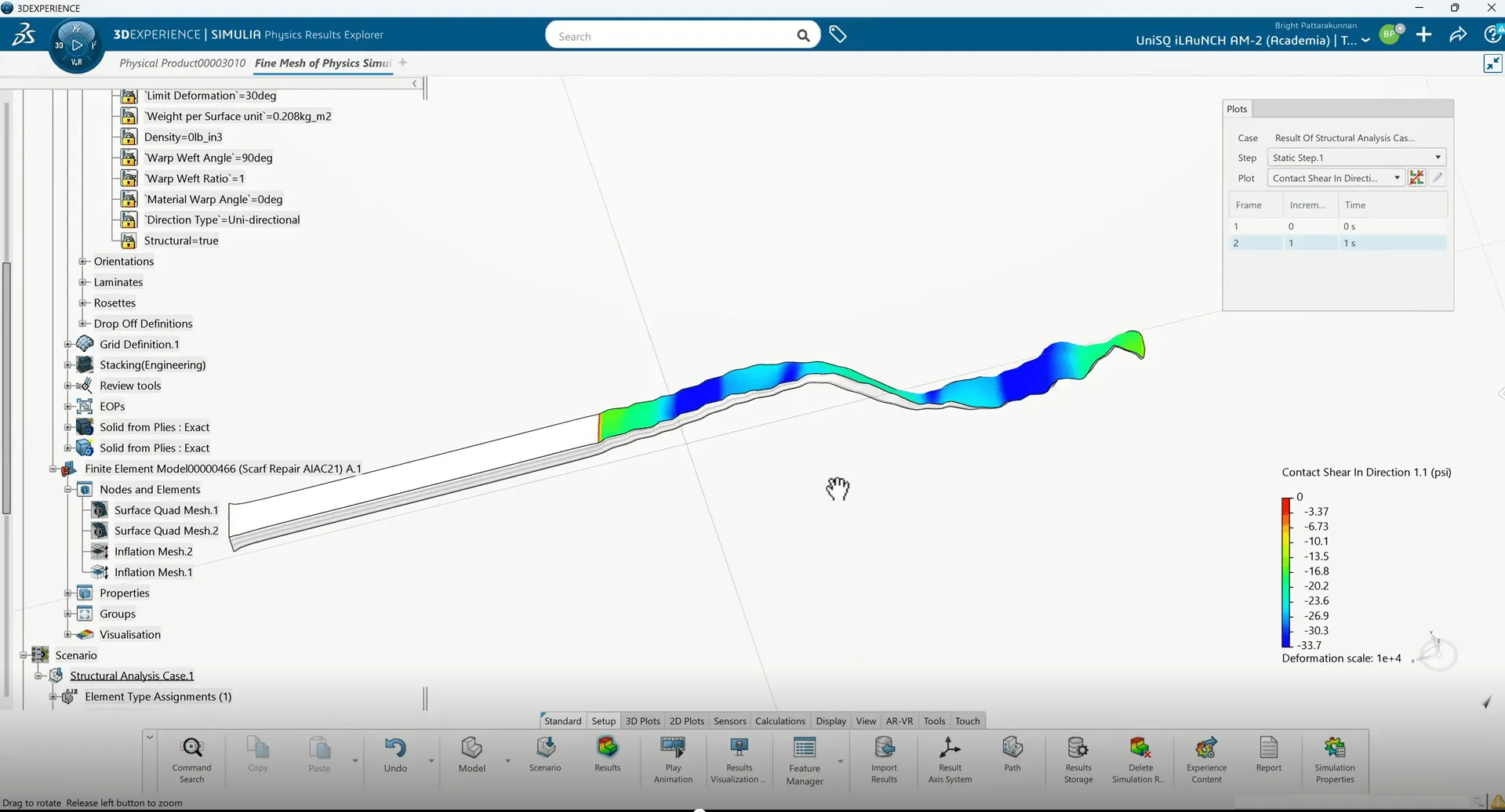
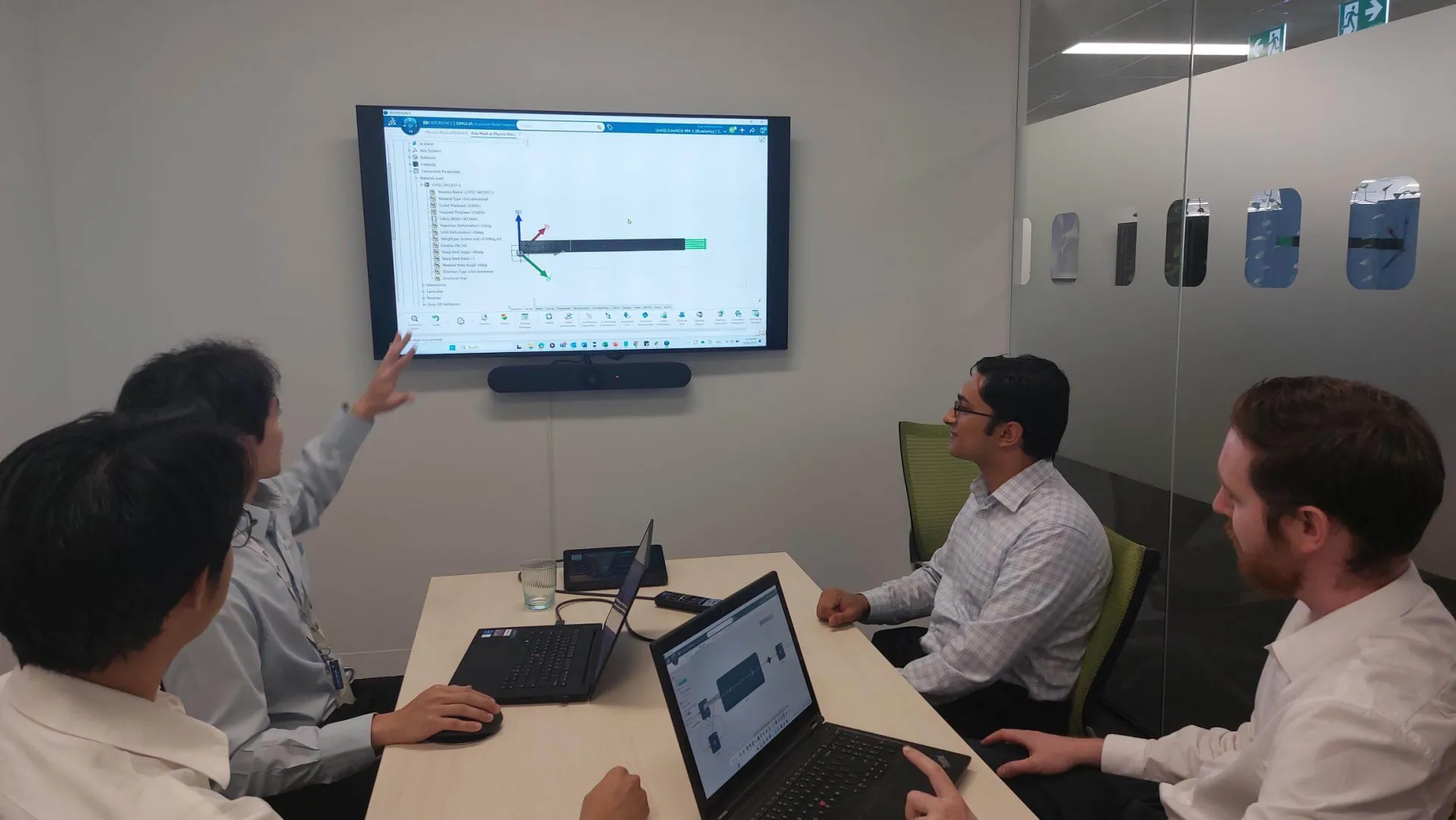
(Photo © UniSQ)
Less manual dependency, greater industrial precision
Traditionally, processes such as scarfing — the preparation of the damaged surface — rely heavily on the technician’s skill, which introduces variability.
Thanks to simulation and virtual process programming, it is possible to define precise paths and even explore their automation through robotics. The result: more consistent, repeatable repairs with a lower margin of error.
A data-driven continuous improvement cycle
The process does not end with the repair. Integrated sensors capture data during critical phases such as material curing, which is then fed back into the digital environment.
This continuous feedback makes it possible to identify deviations, optimize future interventions, and build accumulated knowledge that improves each new process.
Real impact on costs and operations
Reducing the time an aircraft remains out of service is critical for any operator. By making repairs faster, more precise, and more predictable, this approach has a direct impact on operational efficiency and maintenance costs.
It also opens the door to new standards in maintenance, repair, and operations (MRO) within the aerospace sector.
Article based on the customer story published by Dassault Systèmes on its official website.
Access the full case here: www.3ds.com/insights/customer-stories/university-southern-queensland-composite-material-repair
About the Centre for Future Materials
The CFM is an industry-focused research center within the Research and Innovation Division of the University of Southern Queensland (UniSQ). Specializing in composite materials, it features one of the largest facilities in the country dedicated to the manufacturing and testing of these materials, including multiple industrial-scale production cells and state-of-the-art machinery, unique across both academic and industrial R&D environments in Australia.
In addition, the CFM conducts research on sustainable industry initiatives (recycling and clean energy), advanced composite manufacturing, civil engineering applications, and functional materials such as thermoelectrics and flame retardants.
More information: www.unisq.edu.au/
CADTECH Communications Department
comunicacion@cadtech.es – 800 007 177