
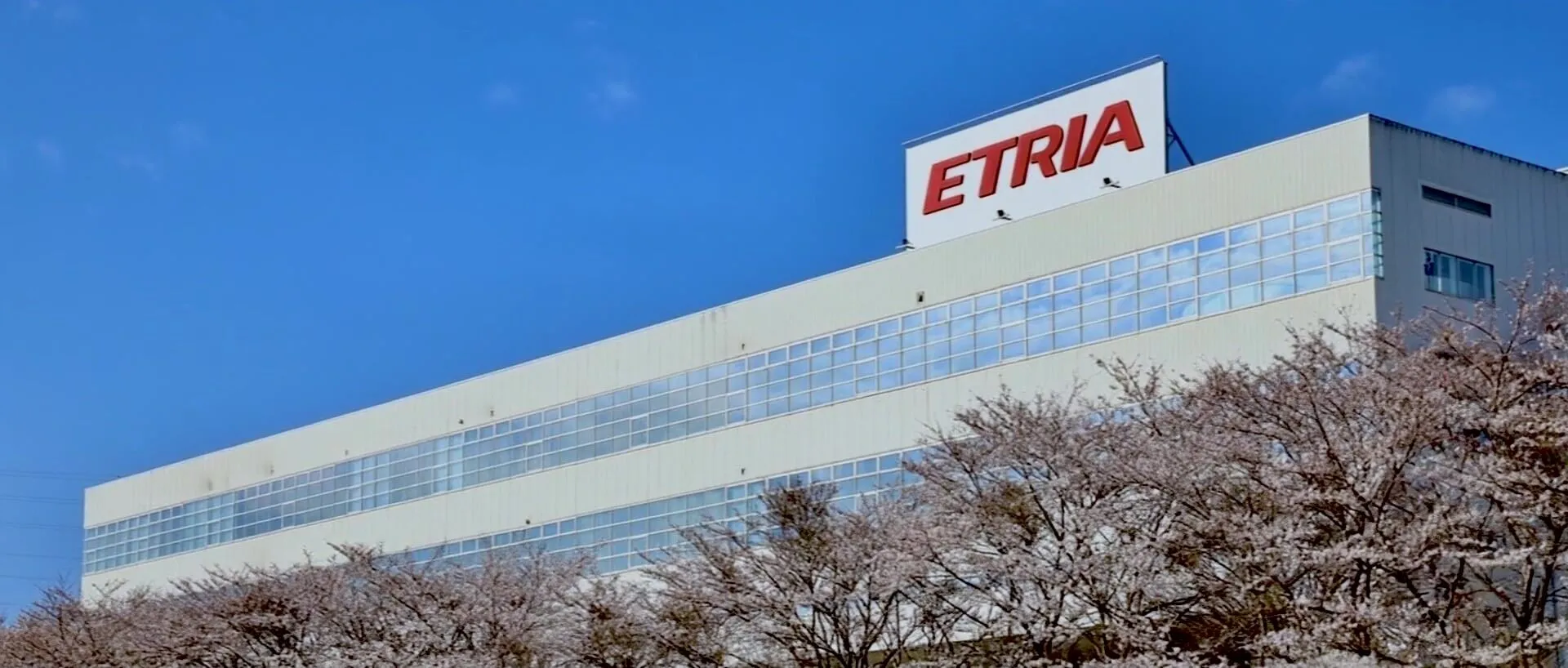
(Photo ©ETRIA)
Modifying a production line usually involves downtime, testing, adjustments, and costs that are difficult to predict.
What if it were possible to redesign an entire factory, validate every change, and optimize every process before moving a single machine?
That’s exactly what ETRIA, a Japanese manufacturer of printing equipment, achieved using the 3DEXPERIENCE platform from Dassault Systèmes.
From the Physical Workshop to the Virtual Twin
ETRIA needed to transform an assembly line designed for A4 monochrome printers into one capable of manufacturing much larger and more complex A3 color devices.
Instead of running tests directly on the plant floor, engineers created a complete virtual twin of the production line.
With DELMIA and the 3DEXPERIENCE platform, they were able to simulate different configurations, validate the behavior of robots and equipment, optimize material flow, and assess the performance of each alternative before bringing it into the factory.
The virtual twin allows us to continuously test, improve, and optimize our processes so we can implement automation faster and make the most of our resources from day one.
Higher Productivity with Less Space and Lower Investment
The results were immediate.
The new line not only enabled production of the new printer model but also significantly improved manufacturing efficiency:
- 3.2% increase in line availability
- 42% reduction in equipment investment
- 50% less floor space required for installation
By reducing the distance between processes and optimizing production flow, ETRIA increased its manufacturing capacity and made it easier to replicate these automated production lines at other facilities.
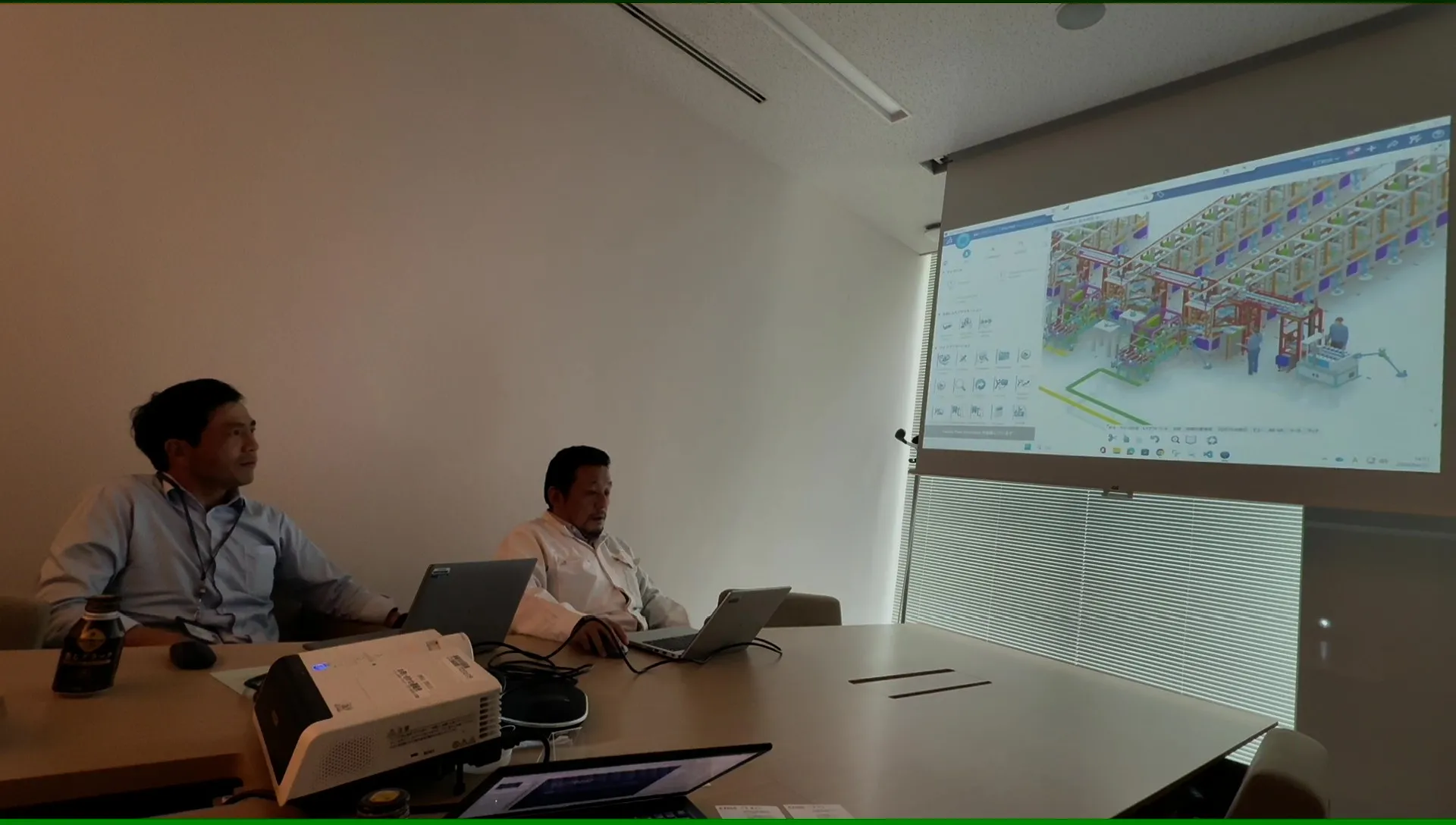
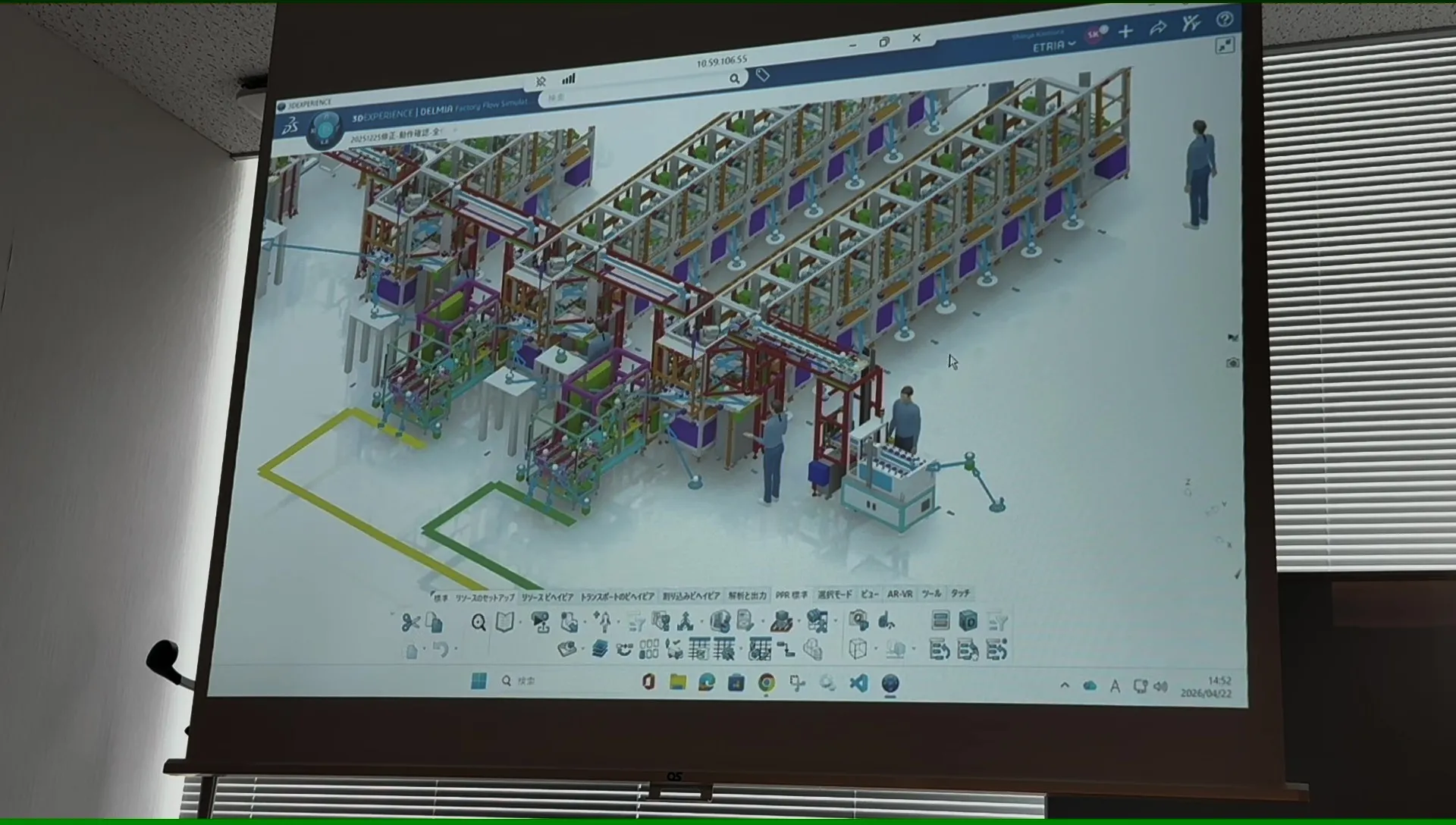
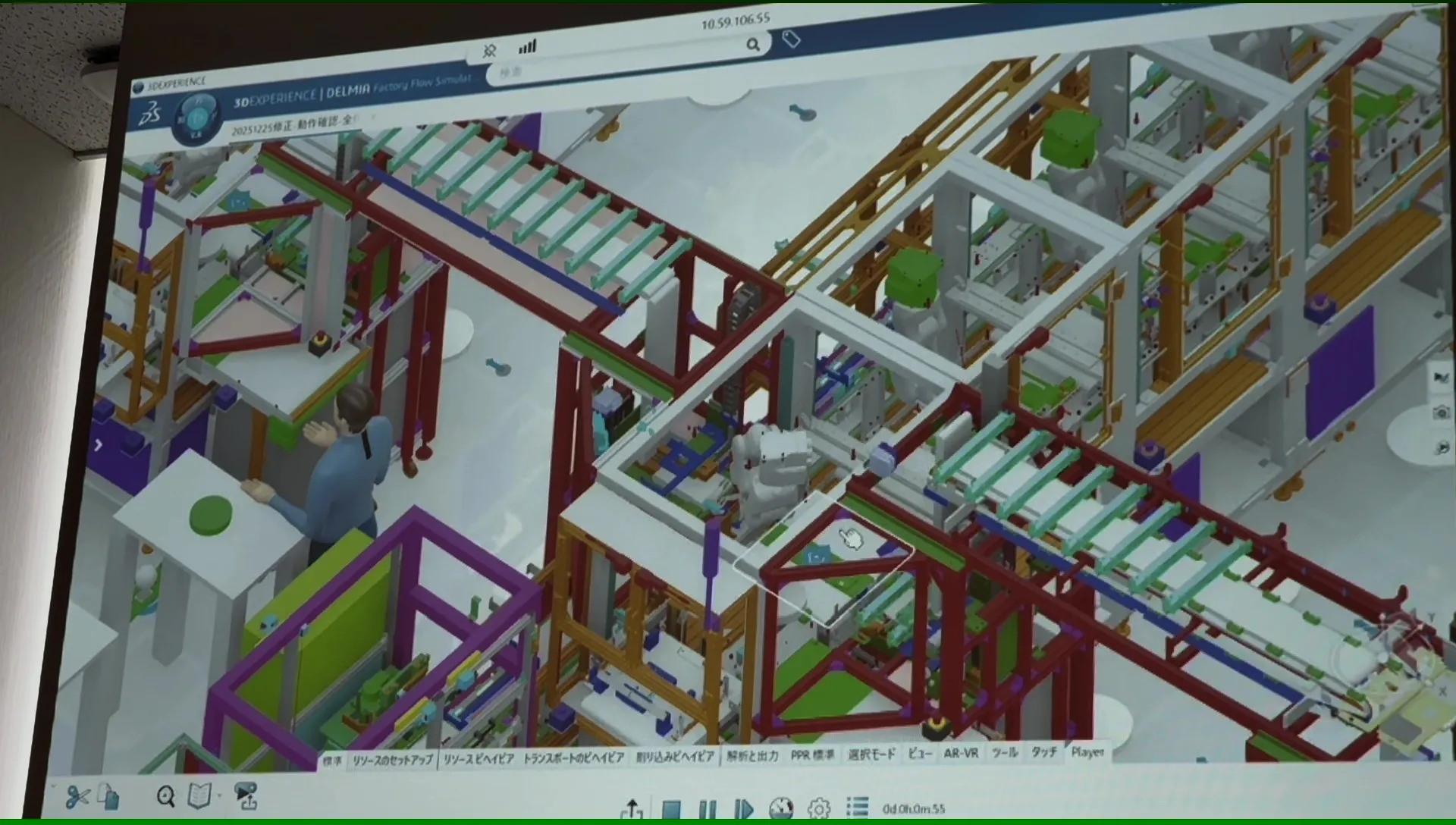
(Photo ©ETRIA)
Collaborative Engineering Without Travel
Because the entire working environment is hosted in the cloud, engineering teams can collaborate from different countries while always working with the same up-to-date information.
Engineers no longer need to travel for weeks to validate installations or fine-tune robots at international manufacturing facilities.
Reviews, simulations, and validations are carried out remotely using the virtual twin, significantly reducing commissioning time.
According to the company, this new way of working has freed up approximately 30% of engineers’ time, allowing them to focus on higher-value activities.
Decisions Based on Data, Not Assumptions
Once the production line is up and running, the virtual twin continues to deliver value.
Real operational data is continuously compared with the digital model to identify bottlenecks, optimize resources, and improve factory performance without disrupting production.
This approach enables continuous improvement based on real data, reducing risk and helping manufacturing facilities evolve toward smarter, more automated operations.
Article based on the customer story published by Dassault Systèmes on its official website.
Access the full case study here: ETRIA Virtual Twin Manufacturing | Dassault Systèmes
About ETRIA
ETRIA is a Japanese company established in 2024 as a joint venture between Ricoh, Toshiba Tec, and Oki Electric Industry. It specializes in the development and manufacturing of printing equipment and imaging technologies, driving the digital transformation of its production processes through automation, simulation, and smart manufacturing.
Learn more: https://etria.global/
CADTECH Communications Department
comunicacion@cadtech.es – 800 007 177