
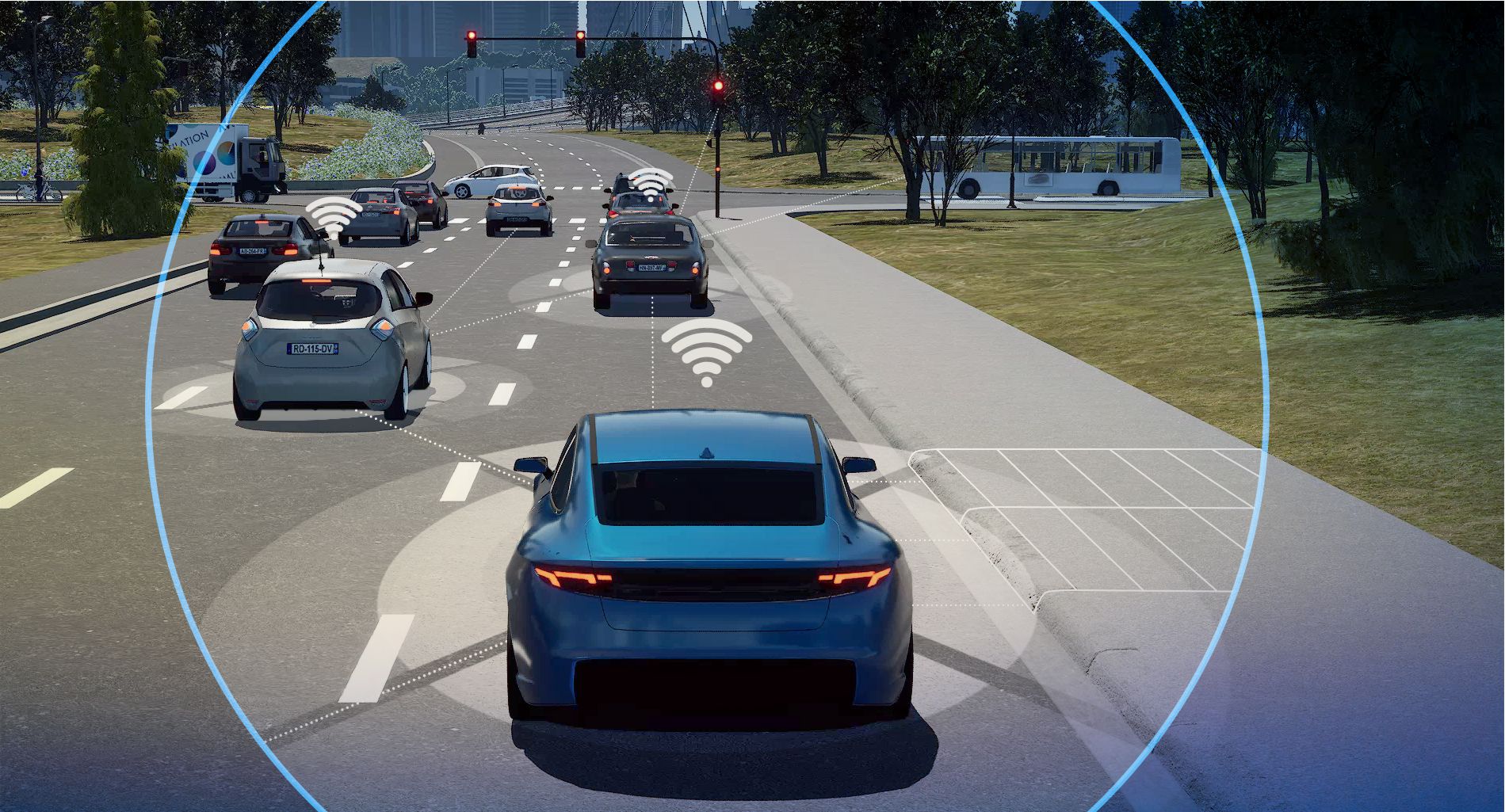
In the race toward autonomous driving, radar has established itself as one of the most decisive sensors. Its ability to measure speed and distance, detect pedestrians, cyclists, and other vehicles, and do so reliably even in rain, snow, or fog makes it a key element of road safety. However, integrating this type of sensor into vehicles is not a simple process. The exact placement of the radar, the thickness of the bumper, or interactions with metallic components can cause signal attenuation, generate false targets, or induce detection errors.
To address these challenges, Continental has turned to electromagnetic simulation with SIMULIA CST Studio Suite. The company has developed a validation framework that combines accuracy, speed, and significant cost reduction, marking a turning point in the development of its radar systems.
“Time is a determining factor. While reworking physical prototypes can take weeks, simulation only takes a day,” explains Mahima P., radar integration simulation engineer at Continental. This speed is combined with significant cost savings: “Simulations have reduced costs by approximately 30–40%,” notes Guntaas K., radar simulation engineer.
In addition, the ability to evaluate multiple sensor configurations, materials, and geometries before moving to physical manufacturing makes it possible to optimize designs with proven reliability, thanks to results aligned with measurements in anechoic chambers.
This approach, supported by the flexibility of SIMULIA’s solvers and specialized support, gives Continental the confidence needed to make critical design decisions. As a result, it ensures that its radar systems achieve optimal performance in real-world scenarios, strengthening essential functions such as emergency braking, adaptive cruise control, and lane-keeping assistance.
Electromagnetic simulation thus becomes a strategic pillar for Continental, not only accelerating innovation but also reducing risk and reinforcing its position at the forefront of autonomous mobility.
And this is not an isolated case. In Spain, these simulation technologies and methodologies are already being applied in innovative automotive projects, particularly in the development and integration of radar systems in vehicles. A step forward that confirms simulation is not just a validation tool, but a true accelerator of innovation in the sector.
Conclusion
Continental’s experience demonstrates how simulation with CST Studio Suite drives safety and efficiency on the path toward autonomous vehicles.
By virtually reproducing driving conditions and optimizing the electromagnetic behavior of each component, Continental has accelerated the development of its radar systems, reduced costs, and improved design reliability. A clear example of how simulation is becoming an essential ally for innovation and safety in the mobility of the future.
Article based on a case published by Dassault Systèmes in www.3ds.com
Are you exploring how to improve the integration of sensors or radars into your products?
CADTECH Communications Department
comunicacion@cadtech.es – 800 007 177