
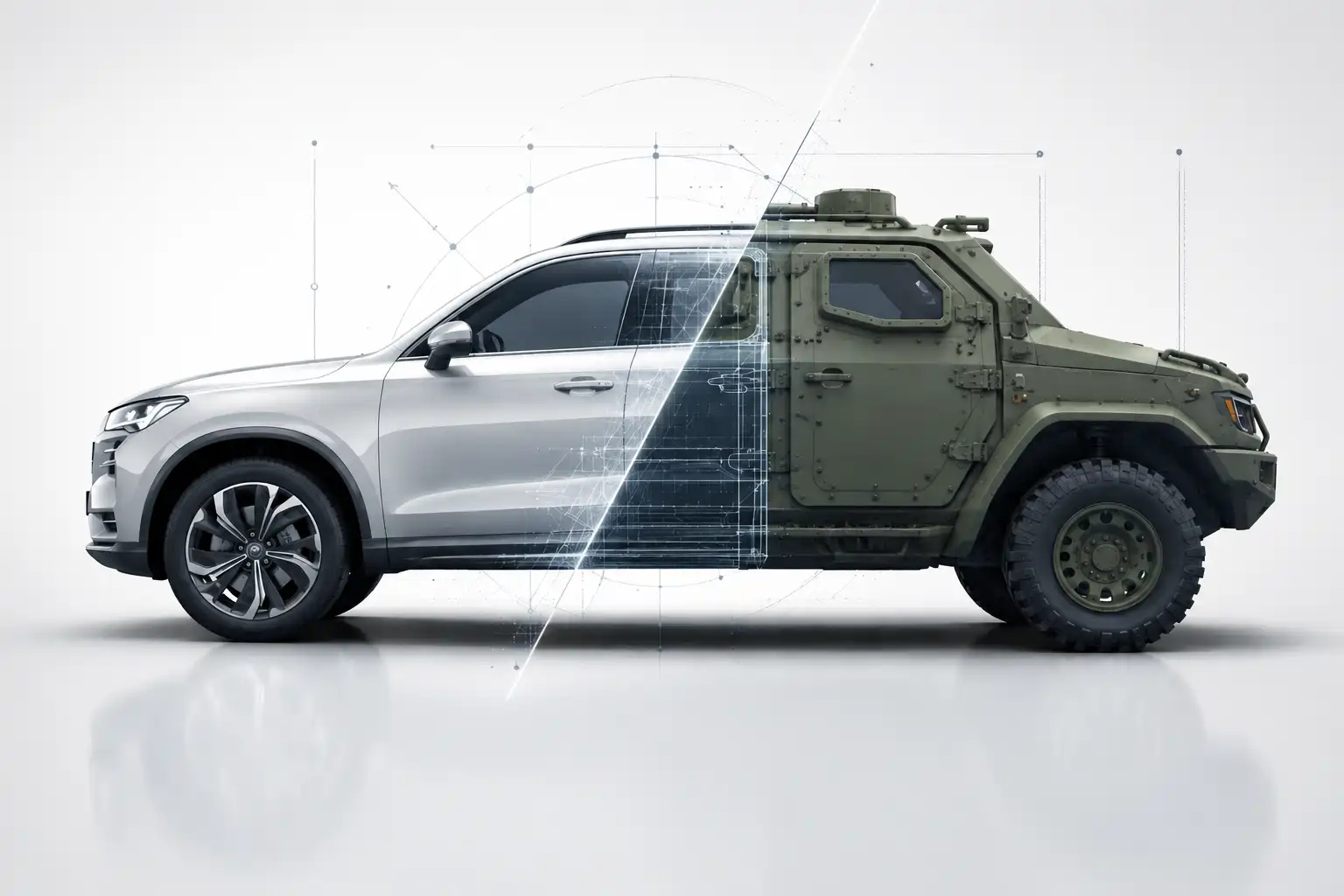
In recent months, the concept of dual technologies has gained prominence in industrial plans, European initiatives, and defense investment programs.
Everything points in the same direction: the civilian industry has a real opportunity to participate in defense programs.
And it’s true.
Many industrial companies — especially in sectors such as automotive, machinery, or industrial equipment — already have capabilities that naturally fit into this context:
- Advanced manufacturing
- Lightweight materials
- Systems integration
- Electronics and software
On paper, the fit is obvious.
However, this opportunity is not as straightforward as it seems.
The opportunity exists… but it’s not automatic
One of the most common mistakes is assuming that having technical capabilities is enough to access these types of programs.
It isn’t.
In defense environments, the criteria are not limited to what a company is capable of doing, but how it is capable of doing it.
And that’s where the main barriers appear.
From working well to working under requirements
Many industrial companies already operate with high levels of demand in their sectors.
But in defense, the level of control and rigor is significantly higher.
It’s not enough to design, manufacture, or validate a product.
It is necessary to:
- Demonstrate every decision made
- Justify every change made
- Ensure full traceability
- Comply with specific regulations
- Manage requirements that constantly evolve
This level of rigor is not an add-on. It is the foundation on which defense programs are built.

The challenge is not technical, it’s operational
In practice, many companies trying to access these types of projects do not face difficulties on the technical side.
The limitations appear in other areas:
- Insufficient control of versions and configurations
- Poorly structured processes for managing requirements
- Disconnect between engineering, validation, and manufacturing
- Lack of traceability throughout the lifecycle
- Limited experience in regulated environments
These gaps have a direct impact.
Companies with a high technical level are left out of defense programs without an obvious reason, simply because they do not meet the way of working that these environments require.
Dual technologies vs. dual engineering
In this context, it is important to differentiate between two concepts that are often used interchangeably.
Dual technologies refer to products or capabilities that can be applied in both civilian and defense environments.
Dual engineering, however, is related to the way those products are developed, validated, and managed under much more demanding requirements.
The opportunity lies in technological capabilities.
The real challenge lies in the way of working.
An opportunity that requires evolution
Accessing defense programs does not simply mean opening a new line of business.
It involves adapting processes, strengthening control over information, and evolving the way products are developed and validated.
For this reason, many companies find themselves at an intermediate stage: they clearly identify the opportunity, but they do not have visibility into what it really means to pursue it.
That is precisely the starting point.
In the following articles, we will address the most common mistakes companies make when trying to enter defense programs, what these environments actually require, and how the way of working changes when operating under this level of demand.
CADTECH Communications Department
comunicacion@cadtech.es – 800 007 177