
NEXT GEN ENGINEERS
Conversations with the teams shaping the future of engineering..
(Photo © BiSKY Team)
Behind every great engineering project are hundreds of hours of work, complex technical challenges, and a team of people united by a common goal.
With Next Gen Engineers, CT CADTECH aims to bring some of today’s most innovative university engineering projects closer to the community by giving a voice to the students who are shaping the future of engineering.
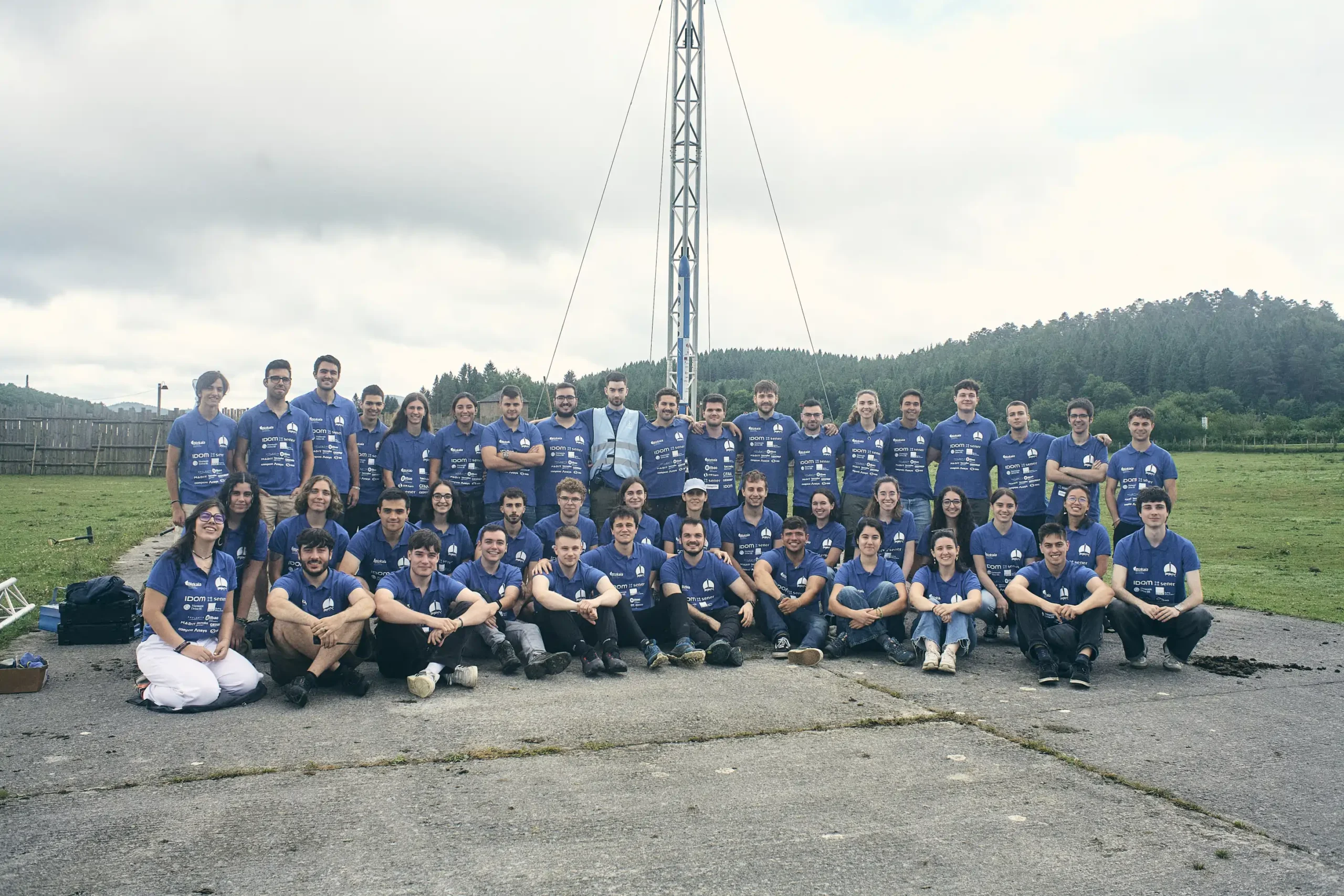
In this first edition, we take a closer look at BiSKY Team, the aerospace team from the Bilbao School of Engineering (UPV/EHU), whose members share an ambitious and inspiring goal: to develop a launch vehicle capable of reaching the Kármán line, widely recognized as the boundary between Earth’s atmosphere and outer space.
As part of its commitment to educating the next generation of engineers, Dassault Systèmes provides the team with access to technologies such as CATIA and the 3DEXPERIENCE platform, solutions used by many of the world’s leading aerospace companies. At the same time, CT CADTECH, Dassault Systèmes’ Platinum Partner, supports BiSKY Team by providing the training, guidance, and technical expertise students need to integrate these tools into their daily workflow and unlock their full potential.
To learn more about their journey, the engineering challenges they face, and how they approach the development of their projects, Christian Horta sits down with Ander Arroyo, Financial Manager at BiSKY Team and a member of the team for the past five years.
Our mission has remained the same since day one: to develop a suborbital launch vehicle capable of reaching the Kármán line. What has changed is the way we plan to get there.
A Mission with a Clear Goal: Reaching Space
Christian: For those who may not know BiSKY Team yet, what is the team, how did the project begin, and what does it represent today?
Ander:
BiSKY Team is an educational project promoted by the Bilbao School of Engineering, made up primarily of students from the school itself and complemented by students from other faculties of the University of the Basque Country (UPV/EHU).
The project was founded in 2018 with a goal that remains unchanged today: to design and build a suborbital launch vehicle capable of reaching the Kármán line, the internationally recognized boundary between Earth’s atmosphere and outer space, located at an altitude of 100 kilometers (62 miles).
What began as an initiative driven by a small group of students has evolved into a multidisciplinary project involving nearly 85 students from fields including mechanical engineering, electronics, automation, computer science, telecommunications, industrial engineering, and physics. Together, they work in a coordinated manner to develop the different systems that make up the rocket.
Over the years, our approach to achieving this goal has also evolved. At first, we believed we could reach the Kármán line in just three years, but we quickly realized the true scale of the challenge. That led us to adopt a phased development strategy with intermediate milestones that allow us to gain experience, validate technologies, and secure the funding needed to continue moving forward.
Beyond developing the launch vehicle itself, BiSKY Team now pursues another important objective: helping strengthen the aerospace sector by training future professionals and fostering collaboration between universities, industry, and public institutions.
For everyone involved, the project also represents a unique opportunity to tackle real-world engineering challenges, participate in the design, manufacturing, launch, and validation of our own systems, and gain hands-on experience that closely mirrors what we will encounter later in our professional careers.
“Beyond developing the launch vehicle itself, BiSKY Team is also committed to supporting the growth of the aerospace industry by educating the next generation of engineers.”
Ander Arroyo
(Photo © BiSKY Team)
Delta: A New Technological Leap
Christian: You recently unveiled Delta. What does this new project represent for BiSKY Team?
Ander:
Delta marks a major turning point for BiSKY Team. It is the first rocket to which we have dedicated an entire academic year for its design, manufacturing, and assembly.
Until now, we developed two rockets per academic year, with launches scheduled for the summer and Christmas periods. However, we decided to adopt a more rigorous approach, focusing on a much more thorough design process that is better aligned with our long-term goal of developing a rocket capable of reaching an altitude of 100 kilometers (62 miles).
This new approach allows us to reduce uncertainty in areas that were still under development while incorporating more advanced instrumentation and onboard sensors to experimentally validate that our calculations and theoretical models accurately reflect real-world performance.
Ultimately, Delta represents a significant step forward in the maturity of our team and a key milestone on our path toward developing a fully in-house rocket, including a hybrid rocket engine designed entirely by BiSKY Team.

(Photo © BiSKY Team)
Christian: What are the main technical innovations that Delta introduces compared to your previous projects?
Ander:
One of our main objectives was to enhance the capabilities of our electronic system to collect a much larger volume of flight data, including parameters such as temperature, while also improving the live video transmission from the rocket itself.
We have also developed a new aerodynamic design capable of reaching speeds approaching Mach 2, optimizing the surfaces exposed to the airflow and eliminating unnecessary mass, with the goal of surpassing an altitude of 10 kilometers (6.2 miles).
In addition, we carried out much more detailed CFD (Computational Fluid Dynamics) analyses than in previous projects to optimize the fuselage geometry. We also developed analytical models that allow us to estimate with greater accuracy the loads the vehicle will experience during flight.
The more accurate these calculations are, the lower the uncertainty when defining the design limit loads. This enables us to optimize the structural safety margins and reduce the weight of components wherever possible without compromising their strength or reliability.
The Challenges of Designing a Rocket
Christian: Developing a rocket requires coordinating many different engineering disciplines. Based on your experience, what are the biggest engineering challenges you face today?*
Ander:
One of the greatest challenges is integrating all the disciplines involved in the project. Developing a rocket requires expertise in mechanical engineering, electronics, telecommunications, computer science, materials engineering, and aerodynamics, among many other fields. As a result, effective coordination between teams is essential.
From a technical standpoint, one of our current priorities is to continue improving the accuracy of our analytical and simulation models. This helps us reduce design uncertainty and make more informed decisions before manufacturing each component.
Another major challenge is the development of our own hybrid rocket engine, a project that requires a gradual approach, validating every solution before moving on to the next stage.
Beyond the purely technical aspects, collaboration is fundamental. Coordinating a team of nearly 85 students with very different backgrounds and levels of experience is a constant challenge, but it is also one of BiSKY Team’s greatest strengths.
(Photo © BiSKY Team)
Christian: Once the rocket has been designed, how do you validate that everything will perform as expected before launch?
Ander:
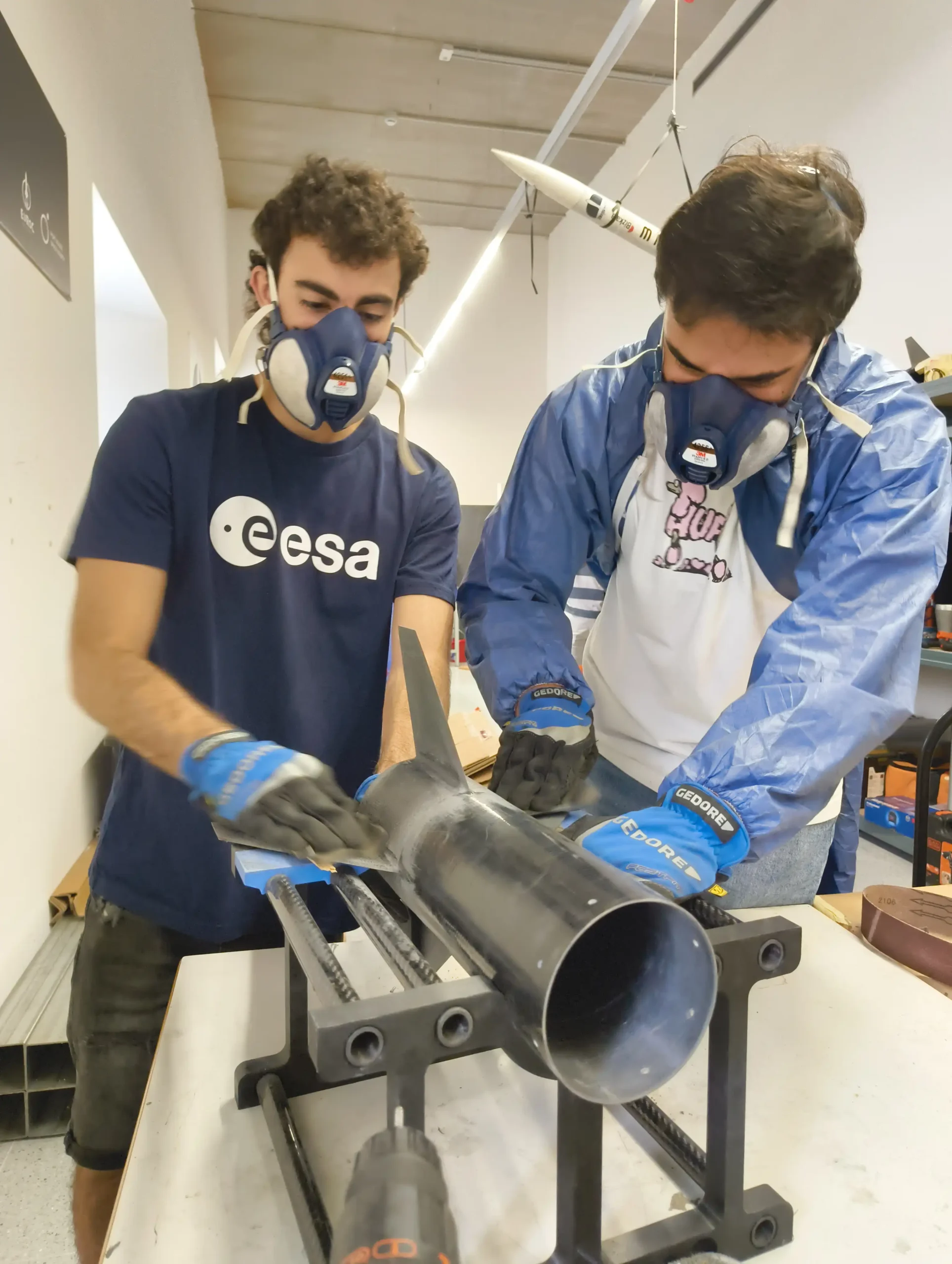
Validation is one of the most critical phases of the project. Before every launch, we perform simulations, analytical calculations, and a wide range of tests on the different systems to verify that their actual behavior matches our predictions.
However, in a project like this, there are always aspects that can only be validated during the flight itself. That is precisely why we place such a strong emphasis on the rocket’s instrumentation. It allows us to collect real flight data and use it to improve future designs.
Every launch is a learning opportunity. Regardless of the outcome, all the data we gather helps us better understand the vehicle’s behavior and continuously refine our engineering models and design processes.
(Photo © BiSKY Team)
Collaborative Engineering with CATIA and 3DEXPERIENCE
Christian: What role do CATIA and the 3DEXPERIENCE platform play in the development of your projects?
Ander:
CATIA is a core tool within BiSKY Team. Every component of the rocket goes through its design phase in CATIA, from the initial concept and sizing of each part to its export into simulation tools that allow us to analyze its performance before manufacturing.
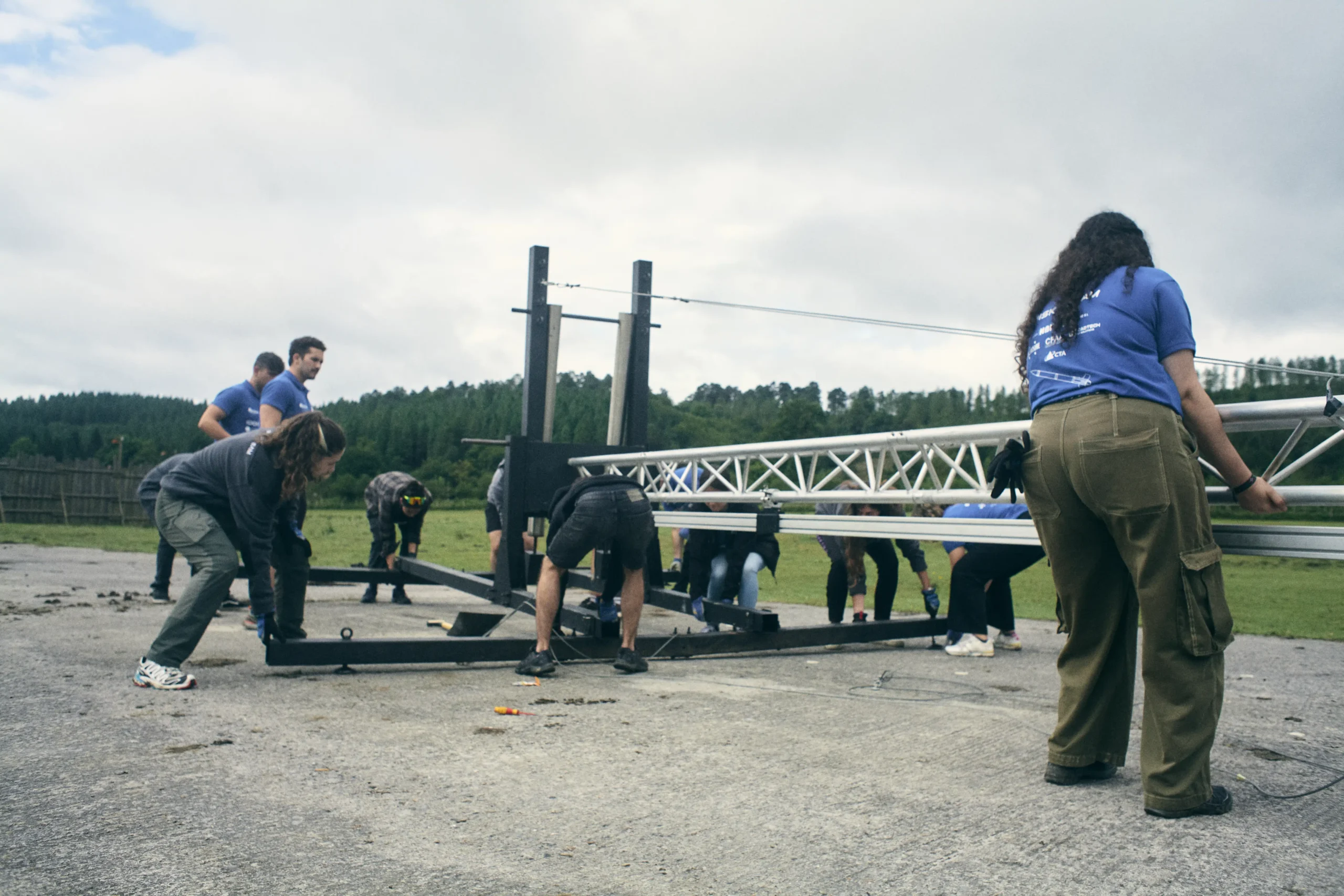
In addition to the rocket itself, we also use CATIA to design our launch structures, manufacturing fixtures, and even to integrate the onboard electronics by defining the cable routing and the placement of components such as antennas.
The 3DEXPERIENCE platform, on the other hand, serves as our collaborative environment, where we store and organize all our CAD files and simulation data. We divide each project into dedicated collaborative spaces and manage access through roles and permissions, ensuring that every team member can work securely with the information relevant to their responsibilities.
Here’s how BiSKY Team designs its projects today using CATIA and the 3DEXPERIENCE platform:

(Photo © BiSKY Team)
Christian: What advantages has working in a collaborative environment like 3DEXPERIENCE brought to your team, and how has it changed the way you work?
Ander:
The biggest advantage is that everyone is always working from the latest version of the design, eliminating any uncertainty about previous revisions or the need to search through multiple folders for the correct files.
Having access to a complete revision history, along with tools that simplify the organization and management of our designs, becomes increasingly valuable as our projects grow in complexity and the number of components continues to increase.
The way we design hasn’t changed significantly, but the way we collaborate certainly has. Today, we work in a much more organized and efficient manner, making better use of our time while avoiding common issues such as lost files or the confusion that comes with managing multiple versions of the same design.

(Photo © BiSKY Team)
Ander Arroyo
Learning with Industry-Standard Tools
Christian: Over the years, you’ve worked with CATIA and the 3DEXPERIENCE platform alongside CT CADTECH. What has this training brought to the team, and how would you evaluate the support you received throughout the process?
Ander:
Since our team is made up of students from different academic programs, it has always been challenging to find dates when everyone could attend the training sessions. Even so, those who participated quickly learned how the platform works and were able to support the rest of the team.
Thanks to that, we were able to adapt quickly and get the most out of the tools from the very beginning. Starting to work with software like this is always a challenge, but the training allowed us to understand its key capabilities and begin using them in our projects right away, saving us valuable time that, as students, we simply can’t afford to lose.
Beyond learning how to use the software itself, everything related to project organization and collaborative workflows has helped us better tackle the real engineering challenges we face as a team.
We’ve also always been able to rely on CT CADTECH whenever we needed to incorporate new functionalities or resolve any questions related to the platform.
Finally, working with tools that are widely used across the aerospace industry gives us a significant advantage as we prepare to enter the professional world, since many companies value engineers who already have hands-on experience with these types of solutions.
“`

“Working with tools that are widely used across the aerospace industry gives us a significant advantage as we prepare to enter the professional world.”
Ander Arroyo
Looking Ahead
Christian: What are the next challenges for BiSKY Team, and what do you hope to achieve with the Delta project?
Ander:
In the short term, our goal is to break our personal altitude record with the launch of Delta, which currently stands at approximately 7,000 meters (23,000 feet).
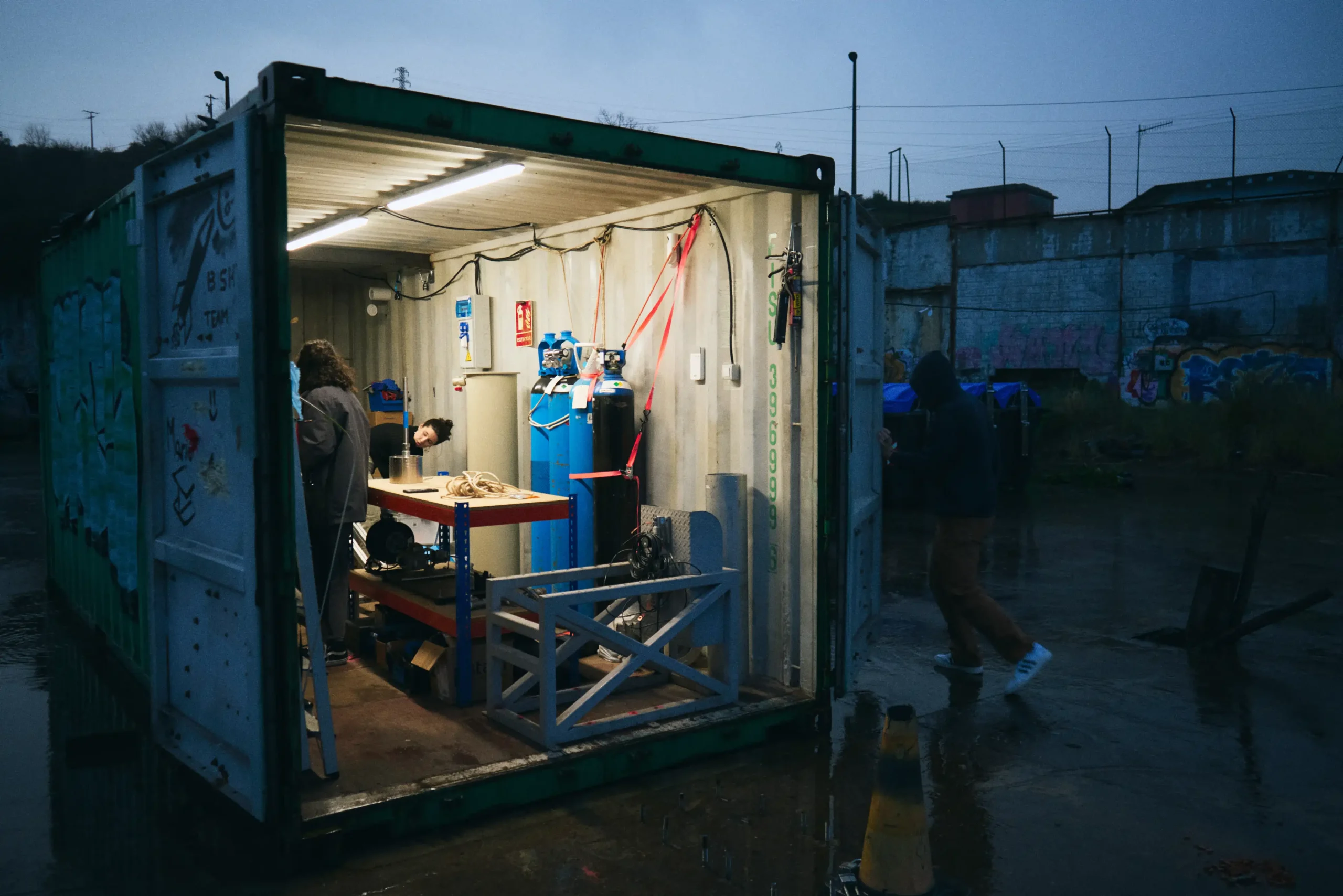
Looking ahead to next year, we are working to overcome the remaining challenges in our test bench so that we can achieve the first ignition of our M2 hybrid rocket engine. From there, we’ll be able to collect real-world data, develop its flight-ready version, and take a major step toward our goal of building a rocket that is entirely designed and manufactured by BiSKY Team.
Reaching that milestone will give us the capability to manufacture and launch our own rockets without relying on commercial propulsion systems.

(Photo © BiSKY Team)
Christian: Looking three to five years ahead, where would you like to see BiSKY Team?
Ander:
We would like to see the team collaborating on projects with the European Space Agency (ESA) and taking a more active role in university competitions, both in Europe and the Americas, always in partnership with the Bilbao School of Engineering.
We also hope that projects like Delta will help us build credibility within the aerospace community. Obtaining authorization to launch a rocket above 10 kilometers (6.2 miles) in altitude involves overcoming numerous technical and administrative challenges, from securing a suitable launch site to managing insurance requirements and working alongside specialized professionals.
That is exactly our goal: to demonstrate that we are a team of students capable of developing engineering projects with rigor, responsibility, and a high level of technical excellence. Earning that trust will allow us to continue growing and take on even greater challenges in the years ahead.

(Photo © BiSKY Team)
The Next Generation of Engineers
Christian: What does it mean to you to be part of the next generation of engineers?
Ander:
It is a great responsibility, but also an opportunity to bring fresh ideas, challenge established approaches, and contribute new perspectives to engineering.
It also makes us feel valued within the professional community and motivates us to keep improving and growing. This is especially important in a generation where artificial intelligence is becoming increasingly relevant and where there are often questions about how well prepared students are when they enter the workforce.
Christian: What advice would you give to other students who are thinking about getting involved in technology projects like this?
Ander:
My advice is to go for it and not be afraid, even if you don’t feel fully prepared to contribute at first.
This is one of the biggest challenges I’ve seen during my five years with BiSKY Team: many people believe they can’t contribute because they think they don’t have enough knowledge yet.
The reality is that no one joins the project knowing everything from day one. A large part of the learning happens along the way, and it’s precisely that journey that allows students to develop their skills, build confidence, and gain real engineering experience.

(Photo © BiSKY Team)
Final Thoughts
Christian: If you had to describe BiSKY Team in a single sentence, what would it be?
Ander:
The answer is simple—it’s the slogan we’ve always stood by:
Forming the next generation of space scientists.
I don’t think there’s anything more to add. That sentence perfectly summarizes everything I’ve shared throughout this interview.
Learn More About BiSKY Team
If you’d like to follow BiSKY Team’s journey, discover their upcoming projects, or learn more about their work, visit their official website: www.biskyteam.com
CADTECH Communications Department
comunicacion@cadtech.es – 800 007 177