
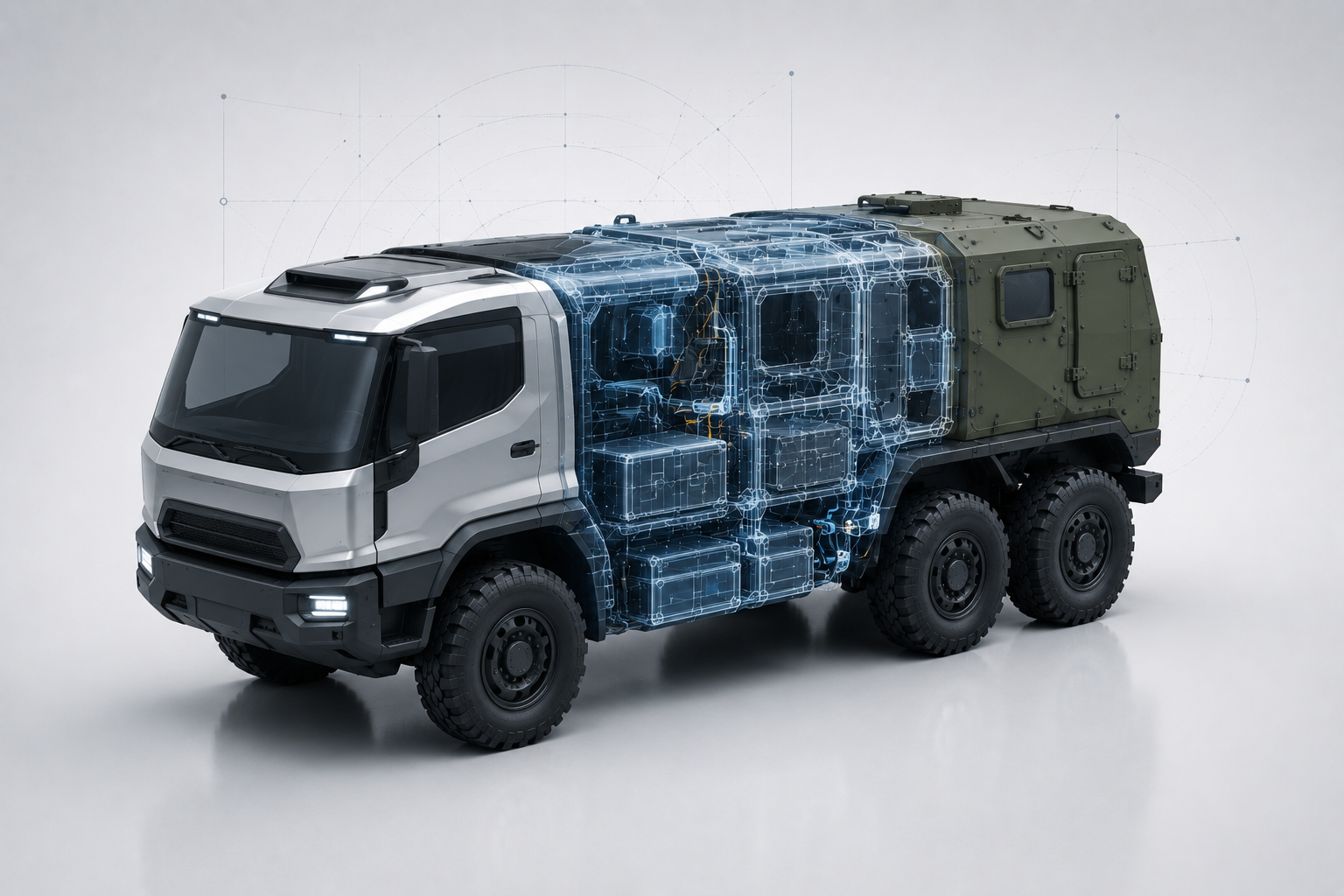
Interest in entering defense programs is growing across the entire industry.
The opportunity is clear: investment, new programs, and the need to expand the supplier base. Everything points to the fact that more and more civilian companies will be able to participate in these environments.
However, there is a pattern that repeats itself frequently.
Companies with strong technical capabilities, industrial experience, and competitive products fail to make progress on this path.
And, in many cases, the reason is the same.
The most common mistake: assuming they are already prepared.
The first mistake many companies make when considering entering the defense sector is simple:
Assuming that if they already design and manufacture complex products in demanding environments, they are ready to make the leap.
From the outside, it seems like a logical conclusion.
If a company works in sectors such as automotive, civil aerospace, or advanced machinery, it is already accustomed to high quality standards, demanding deadlines, and competitive environments.
But defense is not a natural extension of these sectors.
It is an environment with its own rules.
It’s not a matter of capability, but of context.
In defense, the level of rigor is not measured solely by the complexity of the product, but by the context in which it is developed.
This means working under:
- requirements defined from very early stages,
- highly structured processes,
- regulated and auditable environments,
- long and controlled lifecycles,
- multiple stakeholders coordinated within the same value chain.
In this scenario, what matters is not only executing correctly, but doing so within a framework that allows every step to be guaranteed, justified, and audited.

When the way of working becomes a barrier.
This is where many companies encounter their first difficulties.
Not because they do not know how to design or manufacture, but because their way of working is not prepared for this level of rigor.
Some common examples include:
- poorly formalized requirements management,
- design changes without complete impact control,
- information distributed across multiple tools or teams,
- difficulties ensuring consistency across departments,
- processes that work well internally but are not prepared to be audited.
In civilian environments, these aspects may be manageable.
In defense, they are critical.
From industrial supplier to participant in complex programs.
Another significant change is related to the company’s role within the value chain.
In many civilian sectors, companies operate as specialized suppliers with a clearly defined scope.
In defense, participation often involves:
- greater integration with other stakeholders,
- dependence on broader systems,
- the need to align with common standards,
- continuous coordination with customers, partners, and agencies.
This requires a different level of organizational maturity.
It is not just about performing one part well, but about fitting into a much larger and more controlled system.
The leap is not technical, it is operational.
For all these reasons, the transition from the civil industry to the defense sector should not be approached as a technological challenge.
Above all, it is a change in the way of working.
It involves reviewing:
- how requirements are managed,
- how changes are controlled,
- how each phase is validated,
- how traceability is ensured,
- how teams are coordinated.
Without this foundation, technical capabilities lose value in these types of environments.
Understanding the starting point.
Many companies are currently at this starting point:
They have capabilities, they see the opportunity, and they want to explore it.
But they have not yet thoroughly assessed what it really means to adapt to these types of programs.
And that is precisely where the first mismatch between expectations and reality occurs.
The next article will explore why many companies, even after taking the first steps, fail to make progress and ultimately end up excluded from defense programs.
CADTECH Communications Department
comunicacion@cadtech.es – 800 007 177